
Urinary incontinence is one of the most common bladder health concerns among older adults, but it isn't something anyone has to simply live with. Understanding the specific urinary incontinence reasons behind a person's symptoms is the first step toward real relief. Bladder control issues become more common with age, but they're almost always tied to an underlying, treatable cause rather than aging itself.
Many seniors quietly manage bladder leakage on their own, often out of embarrassment, and never mention it to a doctor. That's unfortunate — the American Geriatrics Society notes that up to 30% of older adults living in the community experience urinary incontinence, and treatment can meaningfully improve quality of life. Identifying the weak bladder causes behind a person's symptoms helps caregivers and providers choose the most effective treatment path.
What Is Urinary Incontinence?
Urinary incontinence is the involuntary leakage of urine, ranging from an occasional drip to a complete inability to hold urine. Some leakage is temporary, caused by a UTI or a new medication, while other cases are chronic and tied to lasting nerve or muscle changes. Occasional leakage while laughing or lifting something heavy is very different from a sudden, uncontrollable urge, and the two call for different approaches.
How the Bladder Normally Works
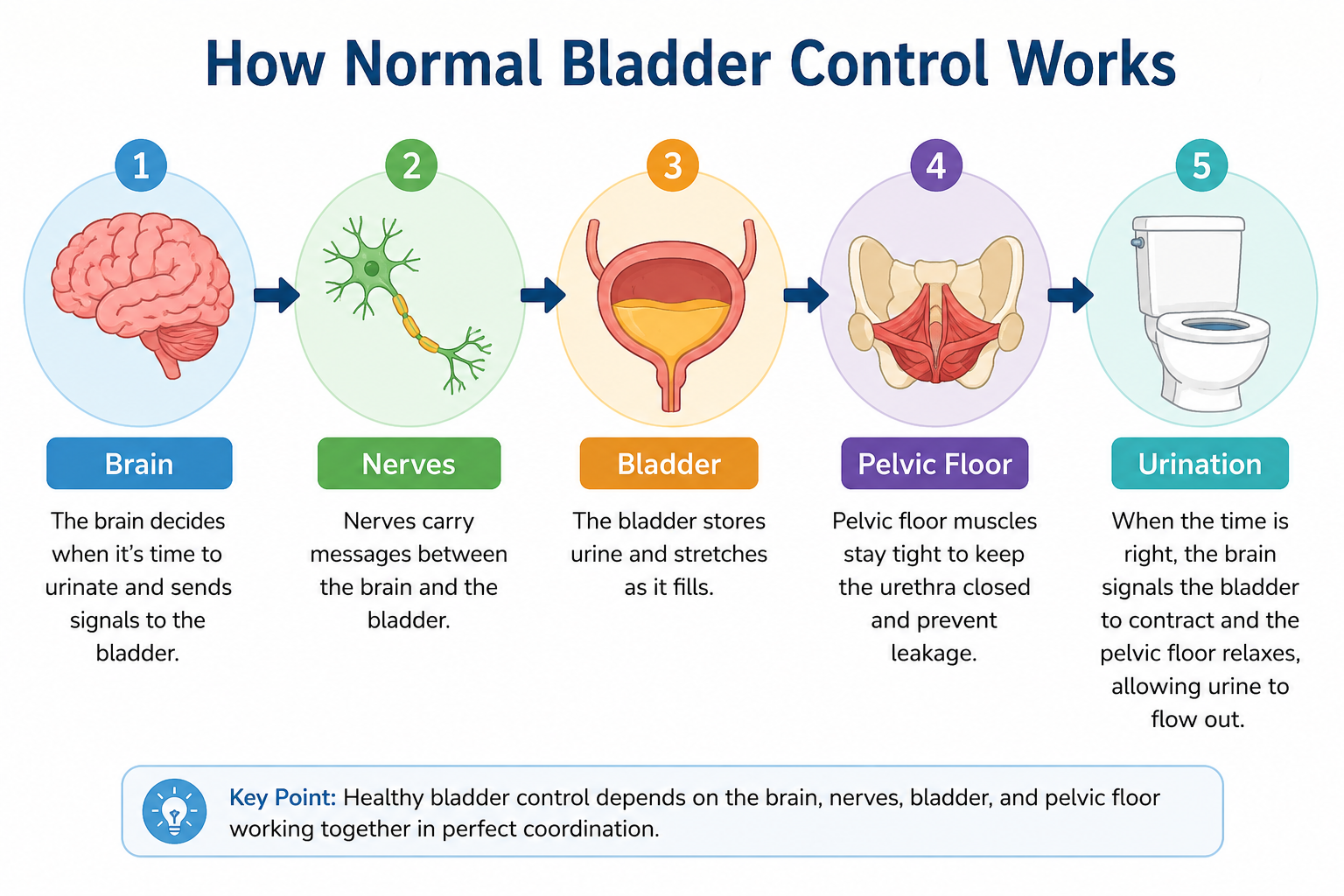
Healthy bladder control relies on a coordinated signal: Brain → Nerves → Bladder → Pelvic Floor → Urination. As the bladder fills, nerves alert the brain, which decides when to urinate and signals the bladder muscle to contract while the pelvic floor relaxes. When any link in this chain is disrupted by nerve damage, muscle weakness, an obstruction, or a cognitive condition, bladder control problems follow.
Why Does Incontinence Become More Common With Age?
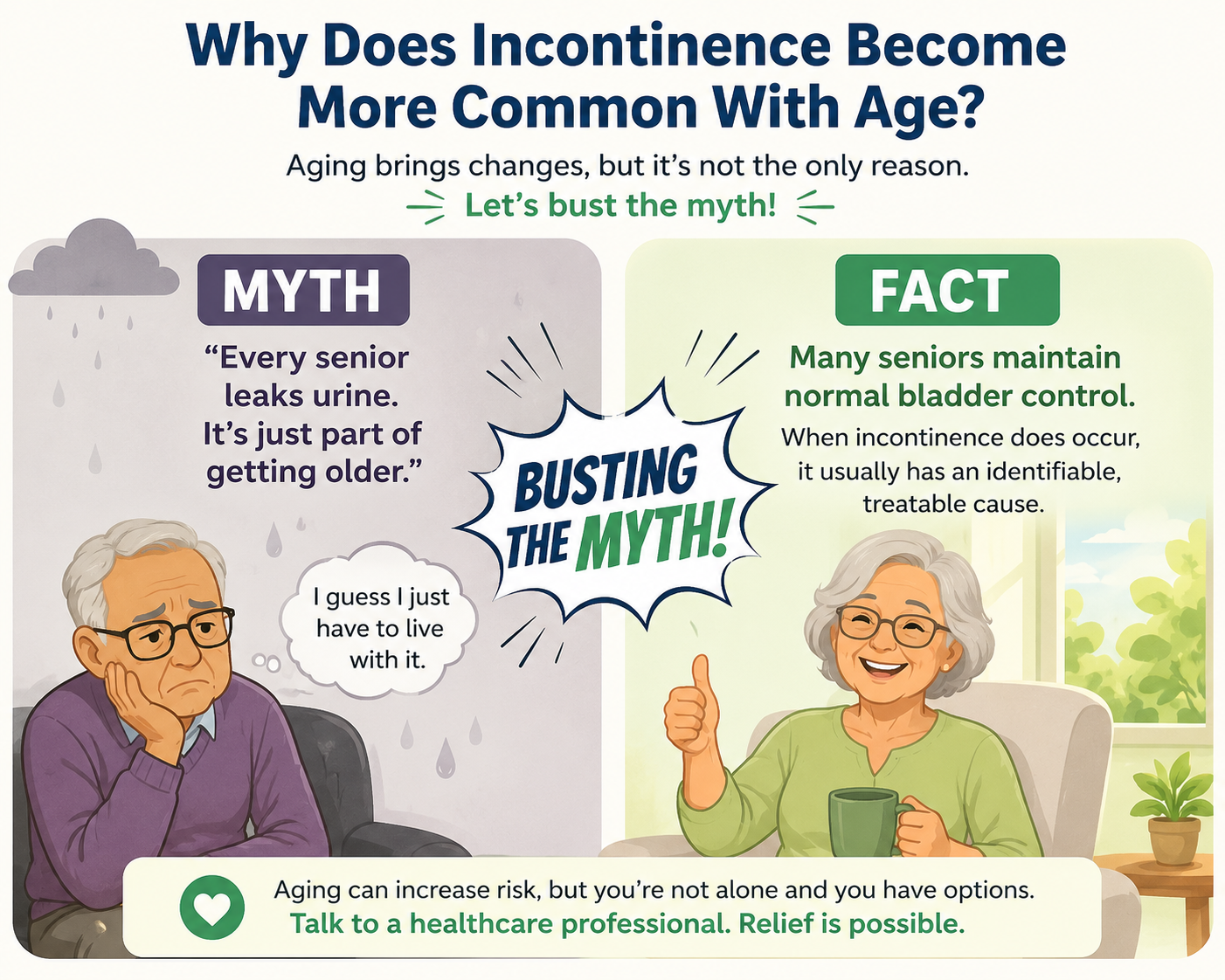
Aging brings changes that make the bladder less efficient: muscle fibers can stiffen, bladder capacity may shrink, and pelvic floor muscles can weaken over time. But aging alone doesn't cause incontinence — underlying conditions usually do. These changes make the bladder more vulnerable, and typically only lead to leakage when combined with a specific trigger, such as an infection, chronic illness, medication, or reduced mobility.
What Are the Most Common Urinary Incontinence Reasons?
- Weak pelvic floor muscles: Childbirth and menopause are leading weak bladder female causes, since both can stretch or weaken the muscles supporting the bladder and urethra. Weak bladder symptoms female patients report most often include leakage during coughing, sneezing, or exercise.
- Overactive bladder: The bladder muscle contracts unexpectedly, even when not full, creating a sudden urge and sometimes frequent urination or urge incontinence.
- Enlarged prostate (men): A leading cause of male bladder control problems — the enlarged gland presses on the urethra, causing dribbling, a weak stream, or overflow incontinence. Prostate surgery can also temporarily affect control.
- Urinary tract infection: Irritates the bladder lining, causing sudden but temporary leakage that typically resolves with treatment.
- Diabetes: Nerve damage from prolonged high blood sugar can reduce bladder sensation, while elevated sugar increases urine production.
- Neurological conditions: Parkinson's disease, stroke, Alzheimer's disease, and multiple sclerosis can all interrupt the nerve signals between brain and bladder.
- Medications: Diuretics, sedatives, and some blood pressure medicines can contribute to leakage as a side effect.
- Obesity: Extra weight increases pressure on the bladder and pelvic floor.
- Chronic constipation: A full bowel can press on the bladder and irritate nearby nerves.
- Mobility problems: Arthritis or other limitations can make it hard to reach the bathroom in time, even when the bladder itself works normally (functional incontinence).
What Are the Different Types of Urinary Incontinence?
| Type | Common Symptoms | Common Causes | Typical Patients |
|---|---|---|---|
| Stress | Leaks with coughing, sneezing, exercise | Weak pelvic floor, childbirth, menopause | Women, post-menopausal |
| Urge | Sudden urge followed by leakage | Overactive bladder, neurological conditions | Both men and women |
| Overflow | Dribbling, weak stream, incomplete emptying | Enlarged prostate, diabetes, nerve damage | Men, people with diabetes |
| Functional | Leaks due to delay reaching bathroom | Arthritis, limited mobility, cognitive decline | Older adults with mobility challenges |
| Mixed | Combination of stress and urge symptoms | More than one underlying cause | Older women most commonly |
What Symptoms Should You Watch For?
- Leaking urine without knowing it (a concern many describe as leaking urine without knowing it woman experience)
- Leaking urine at night — leaking urine at night female is a frequently searched issue, often tied to overactive bladder or evening fluid intake
- Sudden, strong urges to urinate; frequent urination; waking several times at night
- A feeling of incomplete emptying, a weak stream, or dribbling afterward
Seek immediate medical attention if you notice blood in the urine, develop a fever, experience severe pain, or suddenly become unable to urinate.
Who Is Most at Risk?
Risk factors include: Age over 65, Menopause, Pregnancy history, Obesity, Diabetes, Stroke, Smoking, Chronic cough, Prostate disease, and Limited mobility.
Having one or more of these factors doesn't guarantee incontinence, but it's a good reason to mention any bladder changes to a doctor early.
How Is Urinary Incontinence Diagnosed?
- Medical history review: symptoms, medications, other conditions
- Physical examination
- Urine test: rules out infection
- Bladder diary: tracks fluids and leakage over a few days
- Ultrasound: checks how well the bladder empties
- Urodynamic testing: measures bladder pressure and function in complex cases
What Treatments Help Improve Bladder Control?
Lifestyle changes come first: reaching a healthy weight, cutting back on caffeine, timing fluids (especially in the evening), and bladder training to gradually extend time between bathroom visits.
Pelvic floor exercises: Kegel exercises for urinary incontinence strengthen the muscles supporting the bladder and urethra by repeatedly contracting and relaxing them. Most people need several weeks of consistent practice before noticing improvement — consistency matters more than intensity.
Medications: May help relax an overactive bladder or address a cause like an enlarged prostate, and should be discussed with a doctor.
Medical procedures: Considered when other options haven't helped enough, including Botox injections, nerve stimulation, sling surgery, and artificial urinary sphincter placement.
How Do Incontinence Products Help?
Incontinence products don't treat the underlying cause of leakage — that requires medical evaluation. What products like Nuvy's incontinence range do offer is practical daily support: managing leakage, protecting skin and clothing, and helping seniors go about their day with confidence. For caregivers, having reliable protection on hand also reduces the stress of unpredictable accidents.
| Product | Best For | Leakage Level | Usage |
|---|---|---|---|
| Adult Diapers | Heavy leakage | Moderate to heavy | Day and night |
| Pull-Up Diapers | Active seniors | Light to moderate | Daytime |
| Disposable Bed Pads | Bed protection | Night leakage | Sleeping |
| Wet Wipes | Hygiene care | All users | Cleaning |
Conclusion
There are many urinary incontinence reasons — from weak pelvic floor muscles and overactive bladder to enlarged prostate, diabetes, and certain medications — and most can be evaluated and treated. Incontinence is common among older adults, but it's not something to accept or manage in silence. In the meantime, well-designed incontinence products can offer everyday protection and peace of mind for seniors and caregivers alike.