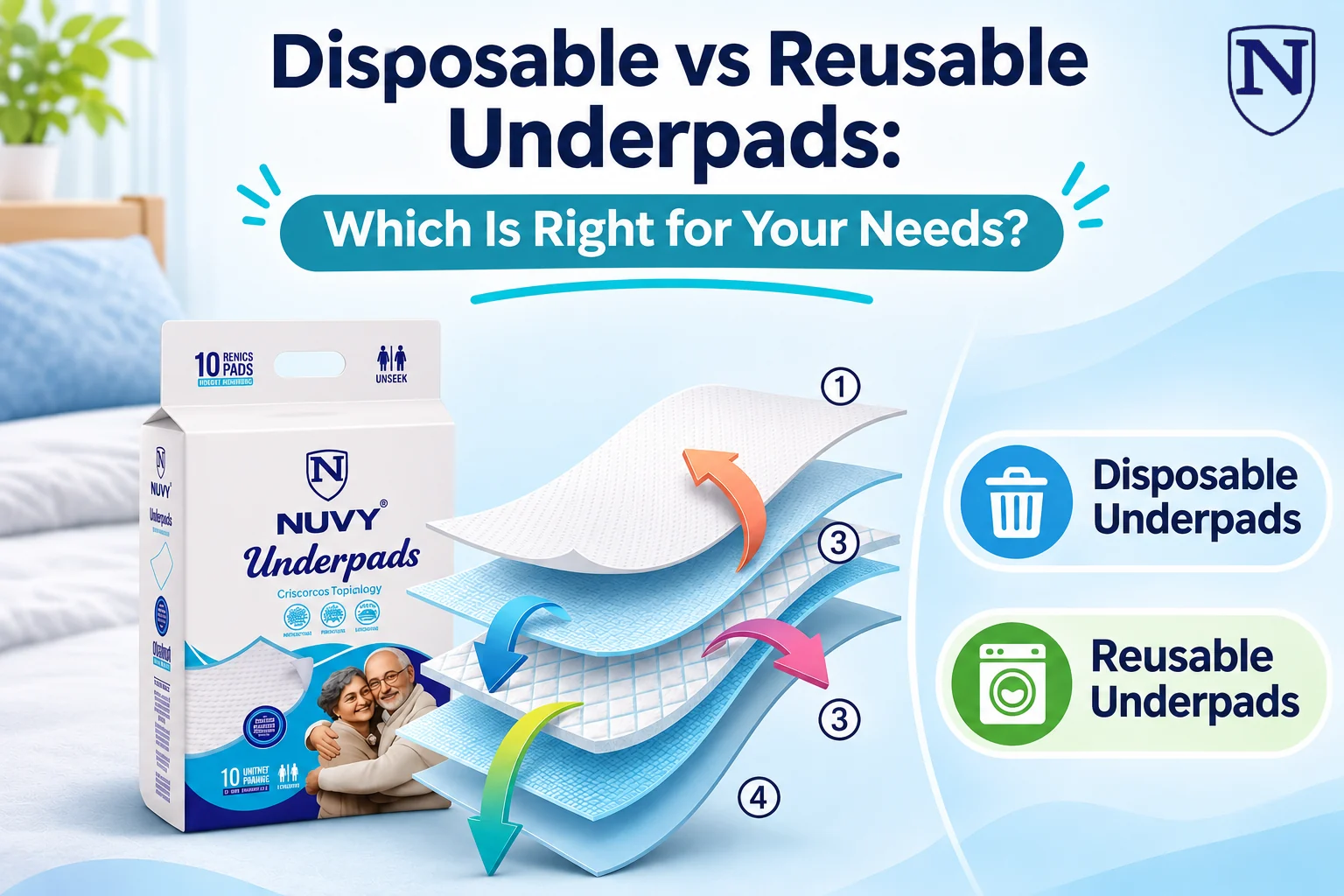
Choosing between disposable and reusable underpads is a practical decision for caregivers and people managing leakage who want to protect a bed without frequent laundry or repeated purchases. It can be hard to know which suits you better, because neither option is best for everyone.
Quick answer: Disposable underpads are single-use and convenient because they don't require washing. Reusable underpads are washable and designed for repeated use. The right choice depends on usage frequency, absorbency needs, cleaning facilities, and budget.
Both types come in a range of sizes and absorbency capacities, so a product's specifications matter as much as whether it's single-use or washable. This guide compares disposable vs reusable underpads on absorbency, comfort, hygiene, maintenance, and cost to help you choose.
Disposable vs Reusable Underpads: Understanding the Difference
Underpads are absorbent pads placed on beds, mattresses, or chairs to protect them from accidental urine leakage. Most have a soft, absorbent top layer that takes in liquid and a waterproof backing that prevents it from reaching the surface underneath. This is a common form of incontinence bed protection.
Disposable underpads are single-use absorbent underpads designed to protect beds, mattresses, chairs, and other surfaces. They're thrown away after use.
Reusable underpads, often called washable bed pads, are designed for repeated use. They're laundered and dried between uses.
Both help manage leakage and protect bedding. The main differences are in how they're used, cleaned, maintained, and paid for over time.
Disposable vs Reusable Underpads: Key Differences
Absorbency, comfort, and leak protection depend on the individual product rather than on whether an underpad is disposable or reusable:
- Absorbency: This varies with a product's design and capacity. Neither type is automatically more absorbent than the other.
- Comfort: Softness and fabric feel differ between products, so check how a pad feels for regular use.
- Leak protection: A waterproof backing and correct placement matter more than whether the pad is single-use or washable.
- Hygiene: Disposable pads are discarded after use, while reusable pads need proper washing and complete drying. Neither type is automatically more or less hygienic.
Always check the manufacturer's specifications, particularly when choosing pads for overnight use or frequent leakage.
Other differences are more consistent between the two types:
| Comparison Point | Disposable Underpads | Reusable Underpads |
|---|---|---|
| Usage | Single use | Multiple uses |
| Cleaning | Discard after use | Wash and reuse |
| Maintenance | No washing or drying required; replace after use | Requires regular washing, drying, and appropriate storage |
| Convenience | Easy to replace | Requires washing |
| Initial Cost | Usually lower per pack | Usually higher per pad |
| Long-Term Cost | Repeated purchases | Depends on durability and washing costs |
| Travel | Convenient to carry and dispose of | Requires storage and washing arrangements |
| Environmental Impact | Creates more single-use waste | Can reduce waste through repeated use |
Performance, durability, and environmental impact vary by product, so check the specifications rather than assuming all pads of one type are the same.
Pros and Cons of Disposable and Reusable Underpads
Each option has practical strengths and limits. Which ones matter most depends on your daily routine and how much time you have for laundry.
Advantages and Disadvantages of Disposable Underpads
Advantages:
- No washing required
- Easy to replace after use
- Convenient for travel and caregiving
- Useful when laundry facilities are limited
Disadvantages:
- Needs regular replacement
- Creates more single-use waste
- Frequent use can increase ongoing expenses
Advantages and Disadvantages of Reusable Underpads
Advantages:
- Can be washed and reused
- May reduce repeated purchasing
- Available in different sizes and absorbency levels
- Can reduce disposable waste when used for a long time
Disadvantages:
- Requires regular washing and drying
- Needs proper cleaning and storage
- May wear out over repeated washing
- Requires several pads, so one is always clean and dry while others are being washed
How to Choose the Right Underpad for Your Needs
Match the choice to your situation:
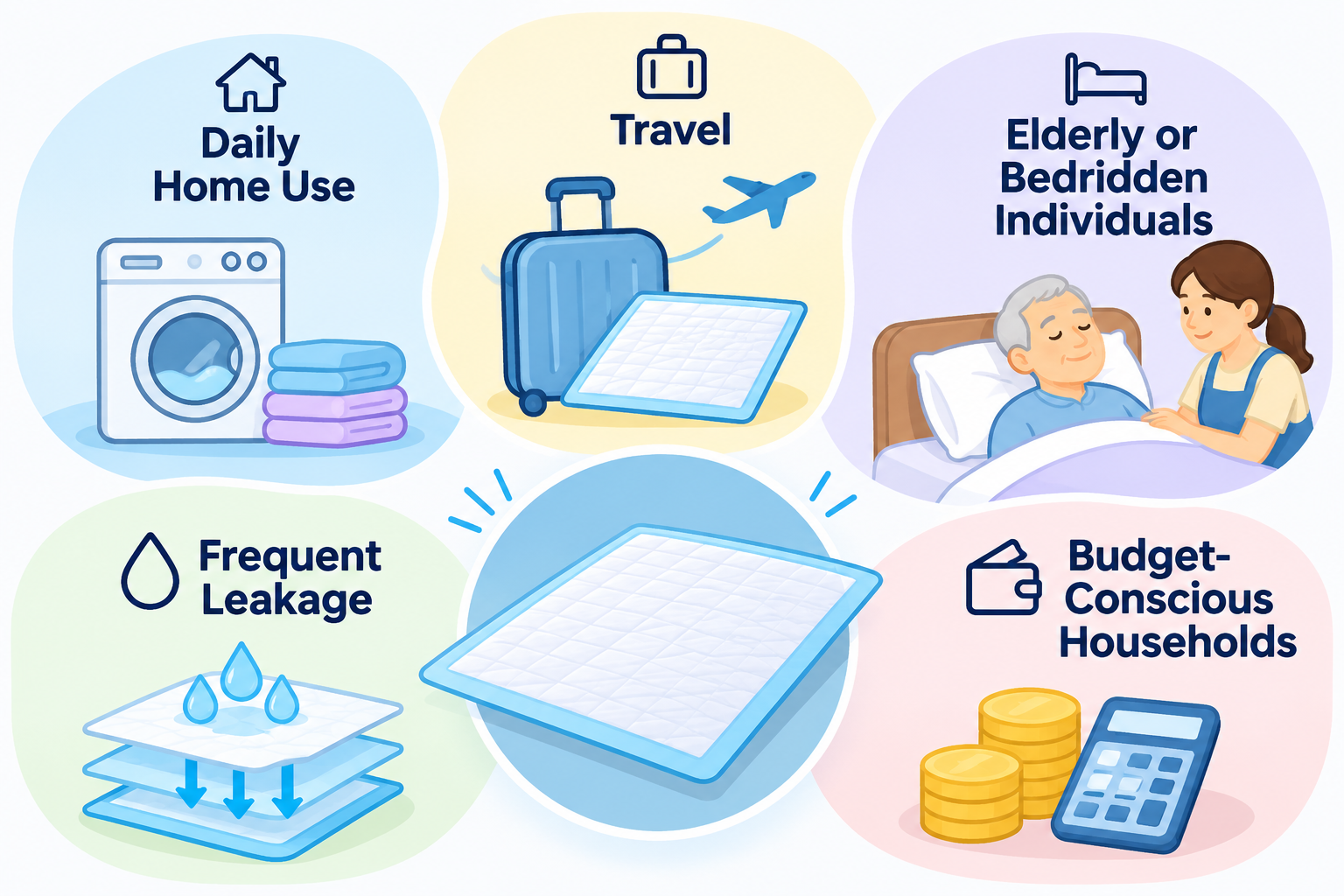
- Daily home use: Consider reusable underpads if regular washing is manageable and suitable products are available.
- Travel: Disposable underpads may be more convenient, since they can be discarded after use.
- Elderly or bedridden individuals: Consider absorbency, comfort, and the caregiver's cleaning routine. Check that the pad suits the size of the bed and covers the area needing protection, that it's easy to change without disturbing the person too much, and that it's practical to replace as often as needed. Our guide to underpads for bedridden patients covers this in more detail.
- Frequent leakage: Choose based on the absorbency and protection you need rather than whether the pad is disposable or reusable. A higher-capacity underpad may be necessary, depending on the amount of leakage and how long the pad stays in place, such as overnight.
- Budget-conscious households: Compare the total cost over time, including replacement purchases, laundry, and how many pads you'll need.
The right choice depends on how often the underpad is used, how much leakage there is, and the user's cleaning preferences.
Tips for Using Underpads Effectively
- Choose a size that covers the area needing protection.
- Place the absorbent side up, following the manufacturer's instructions.
- Lay the pad flat, and avoid folding or bunching it, as this can affect coverage and positioning.
- Change disposable underpads when soiled or when their absorbent capacity is reached.
- Wash reusable underpads according to the care label.
- Dry reusable pads completely before storing or using them again.
- Check for leakage, and replace damaged or worn-out pads.
Conclusion: Which Underpad Should You Choose?
Disposable underpads offer convenience, with no washing and easy replacement, which makes them useful for travel and busy caregiving routines. Reusable underpads offer repeated use, provided they're washed and dried properly and you have enough pads to rotate. Neither is best for everyone, so consider absorbency, comfort, cleaning, and budget before you choose.
If you prefer single-use bed protection, explore Nuvy Healthcare's Disposable Bed Pads and compare the product details to find an option that suits your needs.