When an elderly parent starts leaking urine, it can raise a lot of worries at once: embarrassment, hygiene, overnight accidents, stained clothing and bedding, and how to protect their independence. Incontinence is common among older adults, but it shouldn't simply be dismissed as an unavoidable part of aging. The right approach depends on the underlying cause, severity, mobility, daily routine, and individual needs.
Quick answer: Managing elderly incontinence involves identifying possible causes, setting up regular bathroom routines, maintaining hygiene and skin care, using appropriate absorbent protection, managing nighttime leakage, and seeking professional advice when symptoms change or need evaluation.
This guide covers possible causes, how to approach the conversation, daily management, overnight protection, choosing suitable products, and when professional guidance may be needed.
What Is Elderly Incontinence and Why Does It Happen?
Urinary incontinence means the unintentional leakage of urine. It can look very different from person to person: an occasional small leak is not the same as ongoing, frequent leakage, and the two may call for different approaches. This guide is general information and can't diagnose any individual situation.
What Causes Incontinence in Elderly Women and Men?
There's rarely a single cause. Common contributing factors include:
- Age-related changes in bladder function
- Pelvic floor weakness, which is a common factor behind what causes incontinence in elderly women in particular
- Mobility difficulties, or struggling to reach the toilet in time
- Constipation
- Certain medications
- Urinary tract problems or infections
- Neurological conditions
- Conditions affecting memory or thinking
The underlying cause varies from person to person, which is why a healthcare professional is the best source for working out what's behind a specific case.
How to Help an Elderly Parent With Incontinence
Practical support makes more difference than general reassurance.
Start With a Respectful Conversation
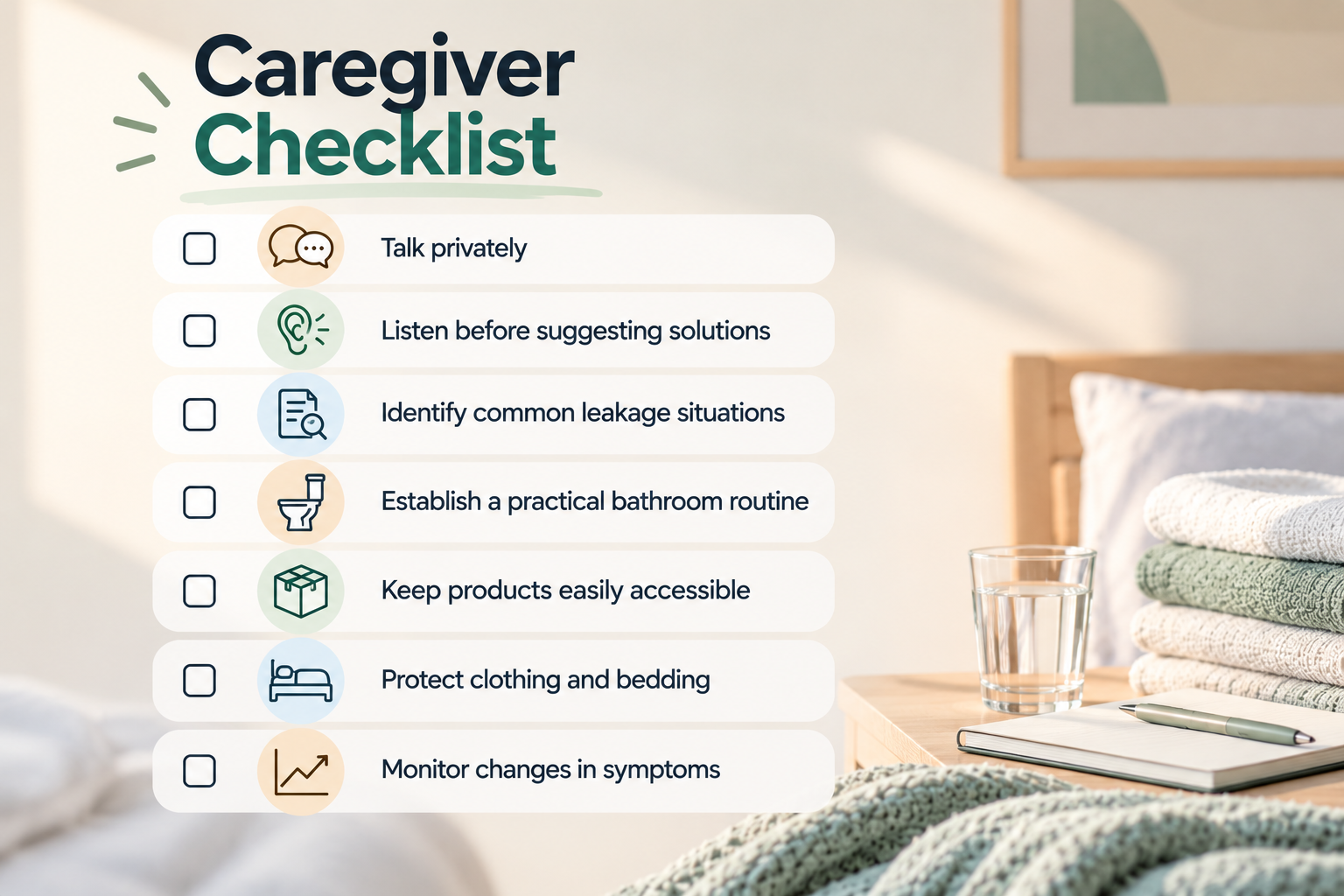
Choose a calm, private moment to discuss the situation. Ask what your parent has been experiencing and listen before suggesting solutions. Avoid blame, teasing, or making assumptions about what they need. Whenever possible, involve them in decisions about routines, products, and the type of help they would like.
Build a Practical Bathroom Routine
Work with your parent's existing routine to create predictable toilet opportunities. Make the bathroom easy to reach, choose clothing that's simple to manage, provide mobility help where needed, keep nighttime access clear, and keep supplies within reach.
How to Talk to Elderly Parents About Incontinence
The way you start the conversation can make it easier for your parent to accept support. Frame it around comfort, dignity, and independence rather than treating incontinence as "the problem."
For example, instead of saying, "You're having accidents again," try something more supportive such as, "I've noticed you've been having some trouble getting to the bathroom. Is there anything I can do to make things easier?"
Do:
- Use neutral, respectful language
- Ask permission before helping
- Discuss product options together
- Respect personal preferences
- Let your parent keep as much control as possible
Avoid:
- Treating your parent like a child
- Making jokes or showing frustration
- Deciding on products without their input
- Discussing their incontinence in front of others
Daily Incontinence Management: A Practical Caregiver Routine
A repeatable system is less stressful than reacting to each accident. Adapt this to your parent's needs rather than treating it as a fixed schedule:
- Offer regular bathroom opportunities that fit their routine.
- Keep absorbent products available at home and when out.
- Change products when needed, rather than waiting until they're fully soiled.
- Clean gently and keep skin dry.
- Keep spare clothing within reach.
- Protect frequently used chairs or bedding where appropriate.
- Note the time, frequency, and circumstances of leakage to spot patterns.
Protecting Skin During Incontinence Care
Regular skin care is an important part of incontinence management. Prolonged contact with urine or moisture can contribute to irritation and discomfort.
- Change wet or soiled products when needed.
- Clean the skin gently rather than scrubbing.
- Pat the skin dry instead of rubbing it.
- Check regularly for persistent redness, soreness, irritation, or broken skin.
- Seek professional advice if skin problems persist or worsen.
Managing Overnight Incontinence in Elderly Adults
Overnight leakage is often the most disruptive, affecting sleep, bedding, and the caregiver's rest. Higher absorbency and a secure fit matter more at night, and overnight diapers for elderly adults are one product category worth considering for people who need higher or longer-lasting protection. No single product works for everyone, so fit and absorbency should match the person.
Overnight checklist:
- Choose protection suited to their absorbency needs and fit
- Keep a clear, well-lit path to the toilet
- Keep nighttime supplies nearby
- Have backup bedding and clothing ready
- Clean and dry skin after any nighttime leakage
- Consider fall risk when they get up at night
How to Choose Incontinence Products for Elderly Adults
Choose based on the person's actual needs rather than age alone. Consider the level and frequency of leakage, day versus night use, mobility, ability to change independently, fit and size, absorbency, comfort, ease of putting on and removing, and lifestyle.
| Consideration | Incontinence Pants/Pull-Ups | Tape-Style Adult Diapers |
|---|---|---|
| Typical use | Day-to-day protection, more underwear-like | Higher-support or caregiver-assisted changes |
| Changing | Generally pulled up and down | Fastened using side tapes |
| Mobility | More suitable when the user can stand or take part in changing | Can be useful when mobility is limited |
| Fit | Waist/hip fit is important | Waist/hip fit and secure fastening are important |
| Caregiver involvement | May allow greater independence | Often useful when caregiver help is needed |
Incontinence Pants vs. Tape-Style Adult Diapers
For people who can stand or participate in changing, adult incontinence pants can offer a more underwear-like fit. When mobility is limited, tape-style adult diapers may make caregiver-assisted changes easier. You can also compare the two formats in our guide to adult diaper pants vs. tape-style diapers.
When Should an Elderly Person With Incontinence See a Doctor?
Incontinence can have different underlying causes, so new or changing symptoms may need professional evaluation. A doctor should be consulted if:
- Leakage starts suddenly or becomes significantly worse
- There is pain or burning during urination
- There is blood in the urine
- There is a fever or the person feels unwell
- Urinary infections keep returning
- The person suddenly has difficulty passing urine
- There are significant or unexplained changes in bladder habits
Seeking professional guidance can help identify possible underlying causes and determine whether further evaluation or treatment is needed.