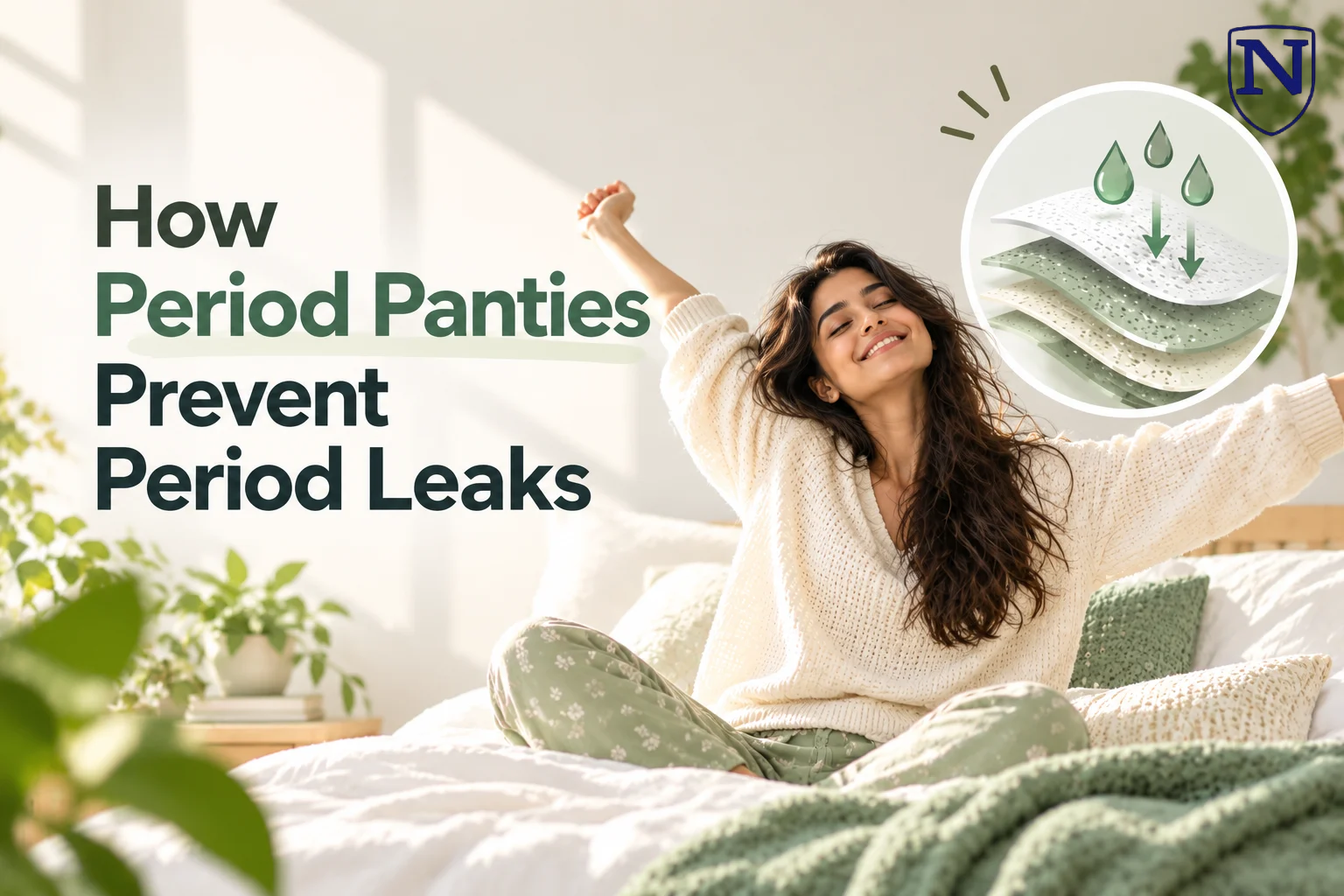
Few things are more stressful than wondering whether your period has leaked onto your underwear, clothes, bedsheets, or a seat. Period panties are designed with absorbent and protective areas that collect and hold menstrual fluid, which can help reduce that worry.
Quick answer: Period panties help prevent leaks by using absorbent layers to collect menstrual fluid and protective construction to reduce seepage through the garment. Their effectiveness also depends on choosing the right fit and absorbency, ensuring proper coverage, and changing the garment when needed.
This guide explains how period panties work, why leaks can still happen, how to reduce the risk, how to manage sleep, sitting, and public situations, how they compare with pads, and how to care for reusable styles.
How Do Period Panties Prevent Period Leaks?
Period panties are built differently from ordinary underwear. Most have a functional gusset area - the panel in the crotch - designed to receive, absorb, and hold menstrual fluid while reducing how much passes through to outer clothing. Exact construction varies by product, and period panties come in both reusable and disposable styles.
Leak prevention isn't simply a matter of thicker fabric. It comes from four things working together:
- Absorption: Absorbent material takes in menstrual fluid and holds it.
- Protective construction: A leak-resistant component helps reduce seepage through the garment.
- Gusset coverage: The protected area needs to cover the places where leakage is most likely.
- Fit and flow match: A secure fit and an absorbency level suited to your flow keep the whole system working as designed.
How Do the Layers in Period Panties Work?
Here's what physically happens to menstrual fluid inside the garment.
Fluid Collection
Menstrual fluid reaches the gusset area, which is the part of the garment intended to manage it.
Absorption
Absorbent material in the gusset takes in the fluid and retains it, which helps the surface feel drier and keeps fluid from spreading through the rest of the underwear.
Leak Protection
Many period panties also include a protective or leak-resistant component that helps reduce fluid reaching outer clothing.
Coverage and Fit
The protected area only works if it stays properly positioned against the body. A garment that shifts, gaps, or sits too loosely can undermine even a well-designed gusset, which is why fit matters as much as absorbency.
Why Can Period Panties Still Leak?
Reducing the chance of leakage is not the same as guaranteeing it never happens. Period panties can still leak when:
- The garment has reached its intended absorbency capacity
- Menstrual flow is heavier than the product is designed to handle
- The size is wrong, whether too loose or too tight
- The gusset shifts out of position
- The garment is worn for too long
- The product isn't suited to your particular flow or situation
If you've experienced period panties leaks despite using them, one of these factors is usually the reason - and most can be adjusted by changing size, absorbency, or how often you change.
How to Use Period Panties to Reduce the Risk of Leaks
Choose the Right Size
A comfortable, secure fit keeps the gusset correctly positioned. When choosing period panties for women, check each product's size guide and consider fit, coverage, and intended use rather than relying on your usual clothing size.
Match the Product to Your Flow
Lighter and heavier days may need different absorbency levels or protection strategies. If you've dealt with heavy period leaking, choose a product with a higher stated absorbency and check that its coverage suits your flow.
Change Them When Needed
Wear time depends on your flow, the product's capacity, your comfort, and the manufacturer's instructions. Change when the garment feels wet, full, or uncomfortable rather than following a fixed number of hours.
Consider Backup Protection on Heavy Days
Some people choose to add another menstrual product on heavier days or when they want extra reassurance. If you do, follow the instructions for each product.
How to Prevent Period Leaks While Sleeping
Waking up to a stained bed is a common worry. To reduce the risk:
- Choose protection designed for overnight use
- Pick coverage that suits your flow
- Make sure the garment fits properly and stays in place
- Change into fresh protection before bed
- Consider an additional product on particularly heavy nights
No period product should be presented as a guaranteed solution for every overnight situation, so it can help to adjust based on how your flow behaves at night.
What to Do About Period Leaks While Sitting or in Public
Leakage risk while sitting or out and about depends on fit, garment positioning, movement, how long you've worn the product, and your flow. There's no single sitting position that guarantees no leaks - correct fit and suitable protection matter more than any one posture.
If a leak happens in public:
- Move to a private place.
- Change your protection as soon as practical.
- Clean the affected area or clothing.
- Use spare period protection.
- Carry a small emergency kit in future, with a spare product and a change of underwear.
Period Panties vs Pads: Which Provides Leak Protection?
Neither is universally better. Both are designed to manage menstrual flow, but they differ in format, reusability, fit, coverage, and changing routine. For either one, leak protection depends on factors such as absorbency, fit, coverage, positioning, and timely changing.
| Comparison Point | Period Panties | Pads |
|---|---|---|
| Format | Underwear designed to manage menstrual flow | Absorbent product worn inside underwear |
| Reusability | Depends on product - some are reusable with care, others disposable | Generally disposable |
| Leak protection factors | Fit, coverage, absorbency, and timely changing | Pad size, absorbency, positioning, and changing |
| Overnight use | Depends on product capacity and flow | Depends on pad coverage, absorbency, and flow |
| Use preference | People who prefer integrated, underwear-style protection | People who prefer familiar disposable protection |
How Are Period Panties Washed and Reused?
Period panties come in both reusable and disposable styles. Disposable period panties, such as Nuvy Premium Period Panties, are designed for single use and should not be washed or reused. Reusable period underwear, on the other hand, is meant to be washed and worn again, and part of good feminine hygiene practice is following its care routine:
- Wash after each use
- Follow the product's care instructions
- Use the recommended washing method
- Dry completely before storing
- Avoid care practices that may damage the garment, and check it over time for wear
Reusable period panties are intended for repeated use, but lifespan varies with construction and care, so follow the manufacturer's guidance rather than a fixed number of uses.
Explore Period Panties for Women
If you're comparing period protection options, explore Nuvy's period panties for women to review the product's fit, coverage, absorbency, and intended use.