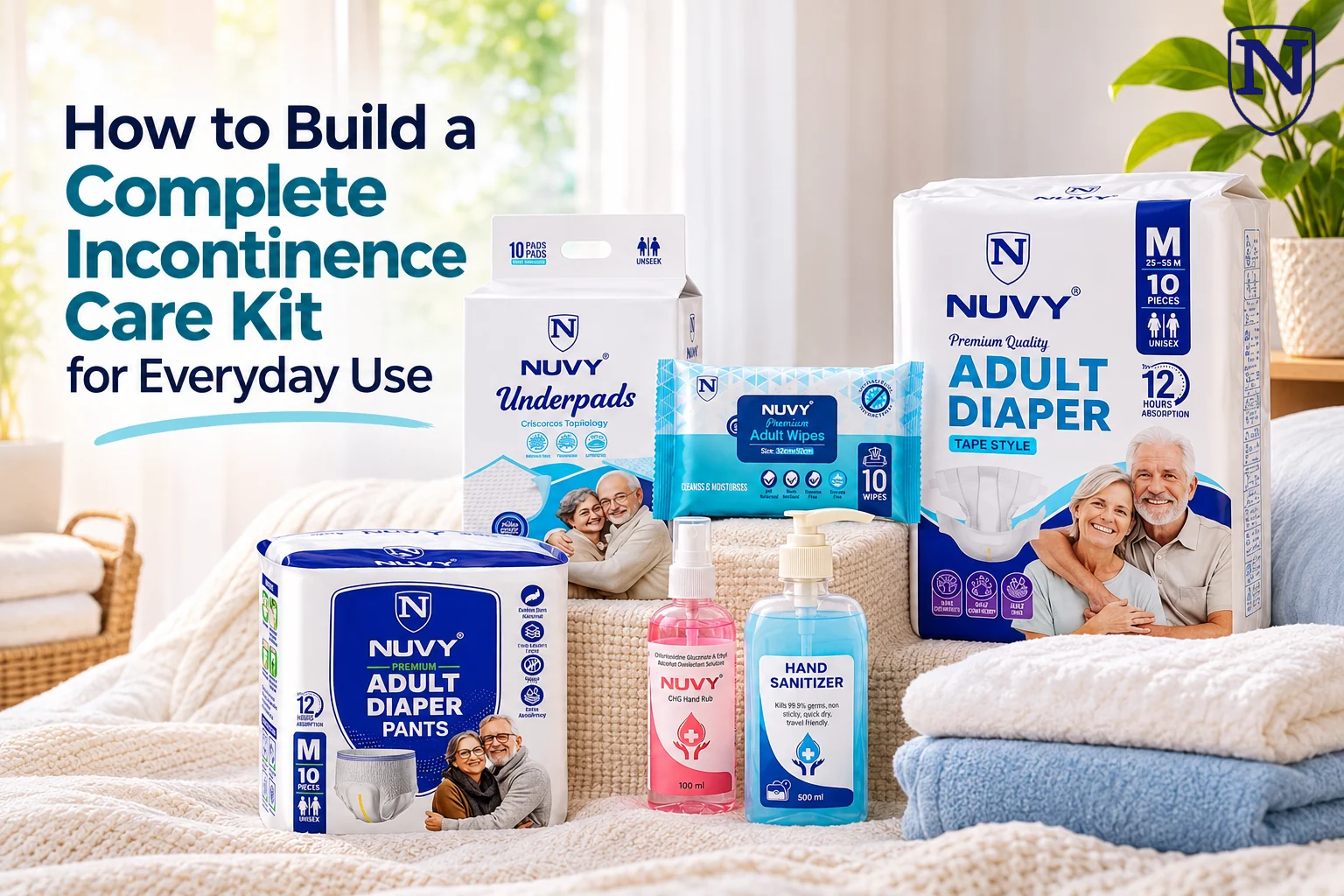
Urine leakage can make everyday life harder: unexpected clothing changes, disturbed sleep, and extra work for caregivers. An incontinence care kit brings together the supplies needed to manage leakage, maintain personal hygiene, and protect bedding, making everyday care easier and more organized.
This guide covers the essential supplies, how to choose suitable products, and how to adapt a kit for daily life, whether you're managing your own care or supporting someone else. The right combination depends on leakage frequency, mobility, comfort, and individual needs.
1. What Should an Incontinence Care Kit Include?
A good incontinence care kit includes absorbent protection, bed and furniture protection, hygiene and skin care supplies, and spare clothing with disposal items. Not everyone needs every item, so start with the essentials and adjust as you learn what works.
Absorbent Protection for Daily Leakage
Adult diapers, absorbent underwear, and incontinence pads form the core of most kits. Pull-up styles generally suit people who can change independently, while tape-style diapers may be easier for caregivers to change when mobility is limited.
Consider leakage level, fit, comfort, and day-versus-night use when selecting protection. If you're browsing incontinence products online, check each product's intended use and absorbency information first.
Underpads for Bed and Furniture Protection
Disposable or washable underpads protect beds and chairs from leakage. They complement wearable protection rather than replacing it when both are needed. Choose a size that covers the area where leakage is likely, and replace disposable pads after soiling. High absorbency underpads can suit nights or longer periods in bed.
Hygiene and Skin Care Essentials
Keep gentle cleansing supplies, soft cloths or suitable wipes (check the label for the intended use), and clean towels on hand. Clean the skin gently, pat it dry, and change soiled products promptly, since prolonged moisture can irritate the skin.
A skin barrier product can help when moisture-related irritation is a concern; use it according to its instructions. Disposable gloves can help caregivers. If redness, soreness, or broken skin persists, speak to a healthcare professional.
Spare Clothing and Disposal Supplies
Pack spare underwear and clothing, a sealable bag for soiled items, and waste bags for used disposable products. Keeping everything together keeps essentials within reach when an unexpected change is needed. Choose clothing that's easy to put on and remove, and keep a spare set in your bag or car for outings.
2. How to Choose the Right Incontinence Products
Match Absorbency to Leakage Needs
Light, moderate, and heavier leakage may each need different products. Consider how much leaks and when, rather than choosing on absorbency claims alone. Capacity varies by manufacturer, so change products according to their instructions and the person's individual care needs. A lighter option may suit daytime, while heavier or overnight leakage may call for more absorbency. Noting when leaks happen for a few days makes it easier to match the product to the pattern.
Check Fit, Comfort, and Ease of Changing
Follow the manufacturer's size chart and measurements rather than guessing from clothing size. Consider mobility, skin sensitivity, ease of fastening, and caregiver assistance. A fit that's too tight or too loose can cause discomfort or leakage. If a product leaks at the legs or waist, the size may be the issue rather than the absorbency, so recheck the size chart before switching products.
When comparing incontinence products online, look for incontinence adult diapers with clear sizing guidance. Notice how much the person can do independently, how often changes are needed, and whether leakage is mostly daytime, nighttime, or both.
3. How to Organize an Incontinence Care Kit for Daily Use
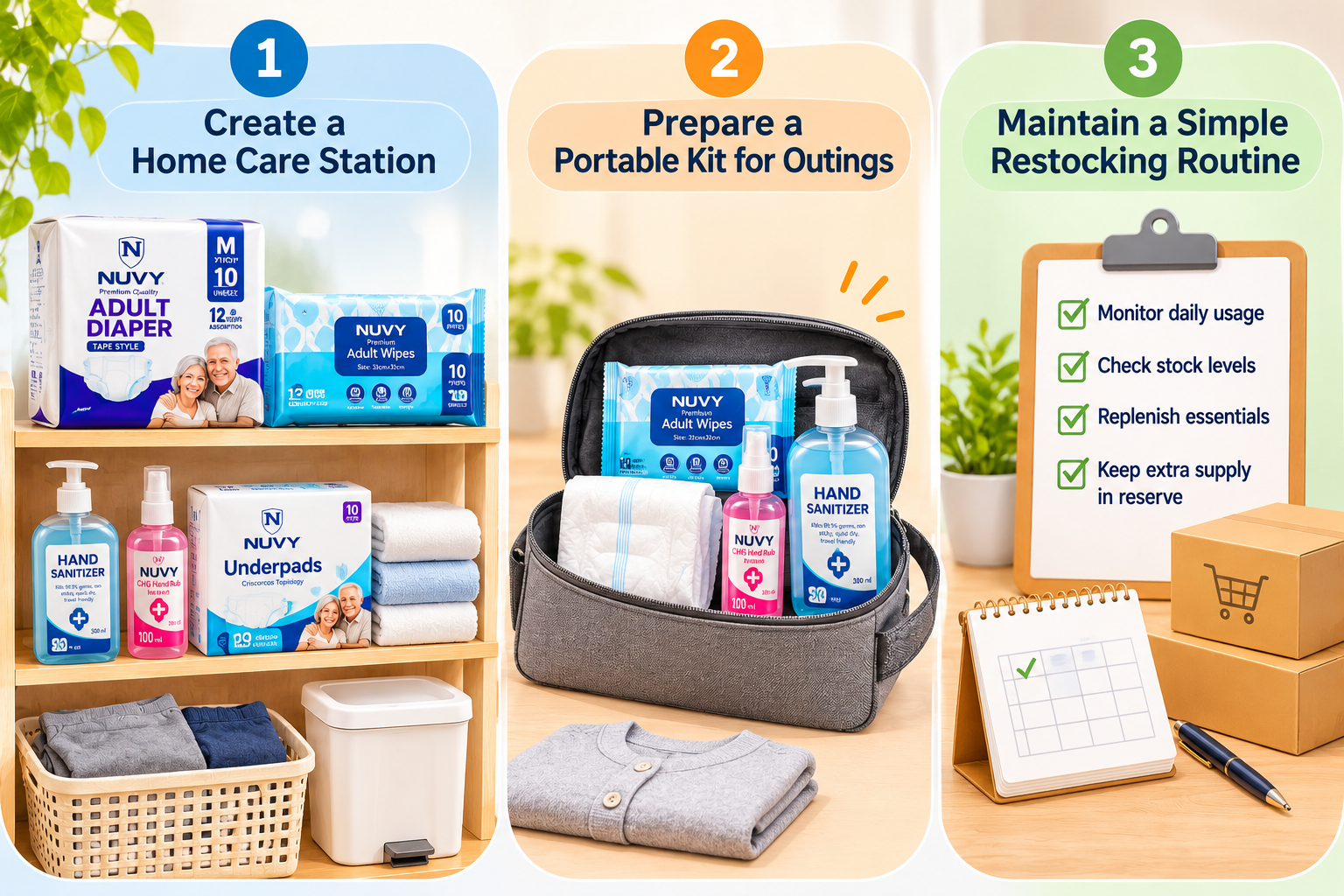
Create a Home Care Station
Keep clean protection products, hygiene supplies, spare clothes, and disposal bags together in an accessible, dry location, ideally one that's easy to reach at night, with a lidded bin nearby for disposal. Store frequently used supplies within easy reach without compromising the person's privacy or dignity.
Prepare a Portable Kit for Outings
Pack spare absorbent products, wipes or cleansing supplies, a change of clothing, and disposal bags. Carry enough for the planned outing, with extras for unexpected delays. A small pouch helps keep used and clean items separate.
Maintain a Simple Restocking Routine
Monitor daily usage, check remaining stock, and replenish essentials before they run out. Note which products fit comfortably and manage leakage effectively so future purchases are more informed. Keeping a few extra days' supply in reserve helps if a delivery is delayed.
4. Incontinence Care Tips for Seniors and Caregivers
Senior incontinence shouldn't automatically be treated as a normal or unavoidable part of aging. Incontinence in the elderly has many possible causes, some of them treatable. A calm, matter-of-fact approach tends to make routines easier for everyone.
- Follow a respectful routine for changing products, cleaning skin, checking for irritation, and protecting privacy. A private, unhurried setting helps preserve dignity.
- Support independence where possible, adapting the routine to the person's abilities rather than taking over every step.
- Consider accessibility, mobility limitations, nighttime needs, and whether the person can change products independently.
- Keep a simple record of leakage patterns, product use, and relevant symptoms, which can help in a healthcare consultation.
- Seek medical assessment for new, persistent, or worsening urinary leakage rather than relying on absorbent products alone.
- Seek prompt medical advice if leakage comes with pain, blood in the urine, fever, or difficulty passing urine.
5. What to Check When Buying Incontinence Products Online
When buying incontinence products online, check these before ordering:
- Product type, size, absorbency information, pack quantity, and intended use
- Cost per unit and expected usage, not just the pack price, so packs of different sizes can be compared fairly
Review the seller's delivery details, return or replacement policy, and product information carefully. Confirm that the product suits the person's mobility, leakage level, and care needs.
- A smaller starter pack, if available, when trying an unfamiliar product
Choose according to personal needs rather than assuming one option works for everyone. Nuvy Healthcare's adult diaper and underpad pages are options you can explore as you compare.
Conclusion: Build a Kit Around Everyday Needs
A practical kit combines suitable absorbent protection, hygiene supplies, bedding protection where needed, and spare essentials. Adjust it to comfort, leakage patterns, mobility, and daily activities as needs change. A kit doesn't need to be perfect from the start; it can grow as you learn what works. When you're ready, explore suitable adult diapers and underpads from Nuvy Healthcare, starting with what fits your situation.