
Wearing a diaper for long stretches is part of daily life for many people managing incontinence, and it puts the skin under constant strain. Moisture, urine, sweat, and friction can all irritate skin that stays covered for hours.
Quick answer: To maintain skin hygiene during long hours of diaper use, change wet or soiled diapers promptly, clean the skin gently, dry it completely, and protect it with a suitable barrier cream when needed. Checking the skin daily helps catch irritation early.
This guide covers practical diaper hygiene steps and ways to prevent irritation, whether you're managing your own care or supporting someone else.
Why Is Skin Hygiene Important During Long Hours of Diaper Use?
Skin that stays in contact with moisture and waste for long periods can become irritated. Urine and stool can disturb the skin's natural protective barrier, which may lead to redness, itching, rashes, discomfort, and, in more serious cases, skin breakdown. Prolonged exposure to urine and stool can also contribute to incontinence-associated dermatitis (IAD), a type of skin inflammation commonly seen in people managing incontinence.
Friction from the diaper rubbing against the skin, along with heat and poor ventilation underneath, adds to the problem. Moisture-related skin irritation and diaper rash often develop together, so prevention matters.
Older adults and people with limited mobility may need extra care. Their skin can be more fragile, and they may spend long periods sitting or lying down, with fewer chances to shift position or notice discomfort early.
7 Essential Diaper Hygiene Steps to Keep Skin Healthy
Following these essential diaper hygiene steps can help reduce skin irritation and maintain comfort during extended diaper use. They work best together.
1. Change Diapers at the Right Time
Change wet or soiled diapers promptly, since prolonged contact with moisture and waste is a common cause of irritation. How often depends on the diaper, the amount of urine, bowel movements, and individual needs. No single number of hours is right in every situation, so check regularly.
2. Clean the Skin Gently
Clean the area with lukewarm water, gentle fragrance-free wipes, or a cleanser made for sensitive skin. Avoid harsh soaps, rubbing, and over-cleaning, which can irritate the skin further. After bowel movements, clean thoroughly but gently, wiping from front to back.
3. Dry the Skin Completely
Moisture trapped under a diaper can cause irritation, so dry the skin fully, including skin folds. Pat gently with a soft towel instead of rubbing, and let the skin air-dry for a short time when practical.
4. Use a Suitable Skin Barrier Cream
Skin hygiene isn't only about cleaning and drying. Protecting the skin from moisture matters too. For caregivers, a barrier cream containing ingredients such as zinc oxide or petroleum jelly can add a thin protective layer between the skin and moisture, which may help alongside regular changes and a well-fitting adult diaper.
It isn't necessary for everyone, so consider it if the skin is prone to irritation. Apply a thin layer to clean, dry skin, follow the product's instructions, and remember that creams can't prevent every type of rash or skin condition.
5. Check the Skin Daily
Look for redness, swelling, itching, unusual marks, or broken skin. Pay attention to skin folds and the areas around the waist and thighs. People who sit or lie for long periods should also be checked for pressure-related skin damage, which differs from diaper rash.
6. Choose the Correct Diaper Size
A diaper that's too tight can cause friction and marks, while one that's too loose can leak and leave skin damp. Check the fit around the waist and legs, and follow the manufacturer's size guide. Choosing a suitable incontinence adult diaper with the right fit can help reduce leakage and friction during everyday use.
7. Allow Skin to Breathe When Possible
When practical and safe, short diaper-free periods let the skin breathe and dry. Keep the skin clean and dry during this time.
How Often Should You Change a Diaper?
There's no single changing schedule that suits everyone. It depends on the person's needs, the diaper's absorbency, and whether it's wet or soiled.
| Situation | Recommended Action |
|---|---|
| After a bowel movement | Change promptly |
| When the diaper feels wet or heavy | Check and change |
| During regular daily care | Check at regular intervals |
| Before going to sleep | Change into a clean diaper and check the skin |
| When skin irritation appears | Check more frequently and assess the skin |
Leaving a soiled diaper on can increase skin irritation, because urine and stool stay in contact with the skin. Overnight use needs regular checking based on individual needs, not just a fresh diaper at bedtime. Absorbency also doesn't mean a diaper should be worn indefinitely: even a highly absorbent diaper still needs timely changes to protect the skin.
How to Prevent and Manage Diaper Rash?
Diaper rash typically shows up as redness, soreness, or irritated skin in the area the diaper covers. To help prevent and manage it:
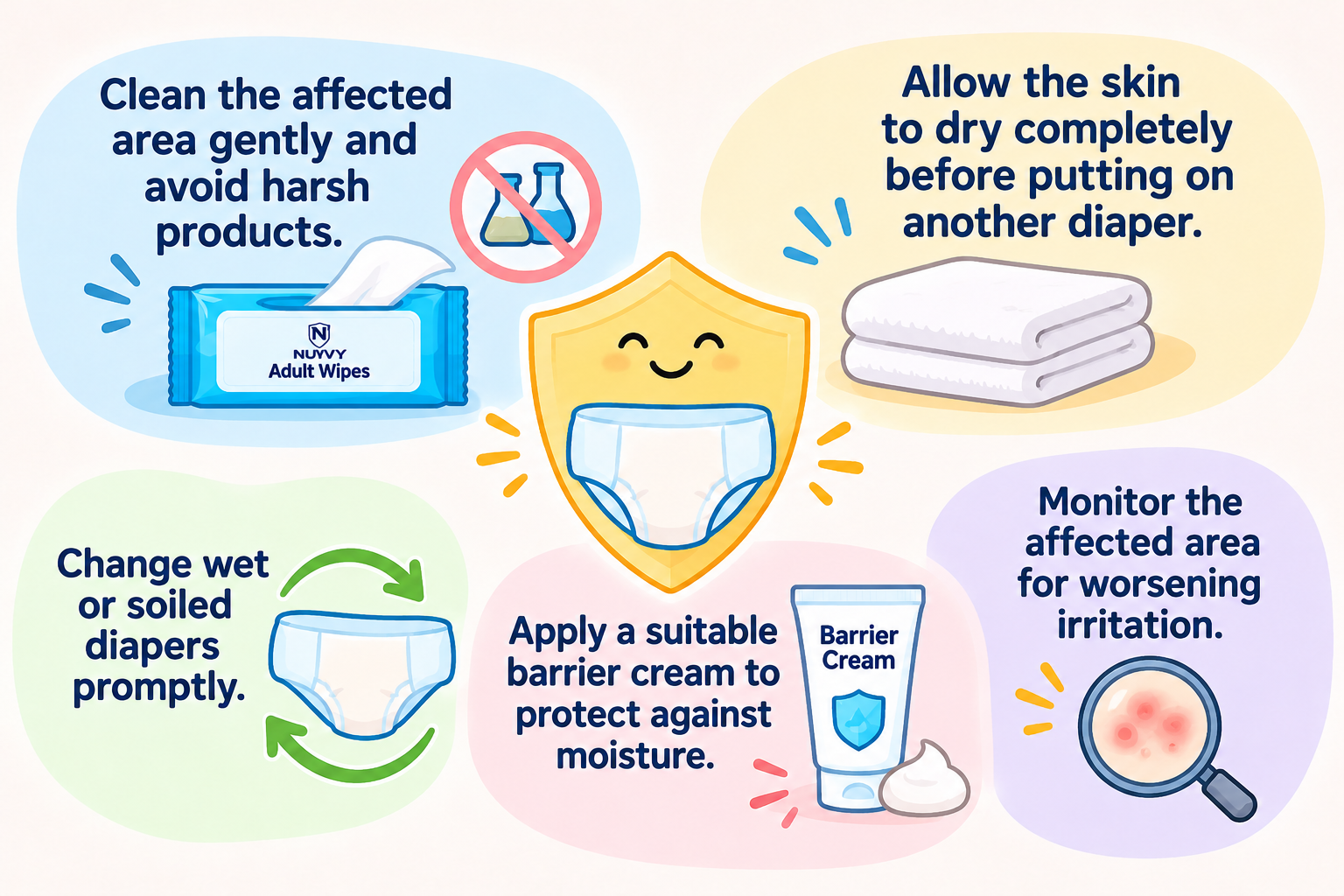
No diaper can completely prevent rashes, so keep checking the skin even when you follow every step.
Mild moisture-related irritation may improve with good care, but raw, bleeding, worsening, or persistent skin should be assessed by a healthcare professional. Signs that need assessment include open or bleeding skin, blisters, pus, fever, or a rash that keeps spreading or isn't improving after a few days of careful care. The appearance and location of a rash can help a healthcare professional identify its cause. For example, some fungal rashes affect skin folds and may need different treatment from ordinary moisture-related irritation. Fungal or bacterial infections may need specific medical treatment, and creams containing steroids or antifungal ingredients should only be used on medical advice.
Common Diaper Hygiene Mistakes to Avoid
- Wearing wet or soiled diapers for too long, which keeps moisture and waste against the skin
- Rubbing the skin while cleaning instead of patting, which adds friction
- Using heavily scented products, which can irritate sensitive skin
- Choosing the wrong diaper size, which can cause friction or leaks
- Applying too much cream, or applying it without cleaning the area first
- Ignoring redness or skin irritation, since early changes are easier to manage
Final Thoughts: Make Daily Diaper Care More Comfortable
Maintaining skin hygiene during diaper use starts with regular changing, gentle cleaning, thorough drying, and consistent skin checks, and a steady routine makes this easier for caregivers. Choosing the right adult diaper with suitable absorbency and a comfortable fit can also support everyday comfort and skin hygiene. Explore Nuvy Healthcare's adult diaper range to find suitable options for your incontinence care needs.