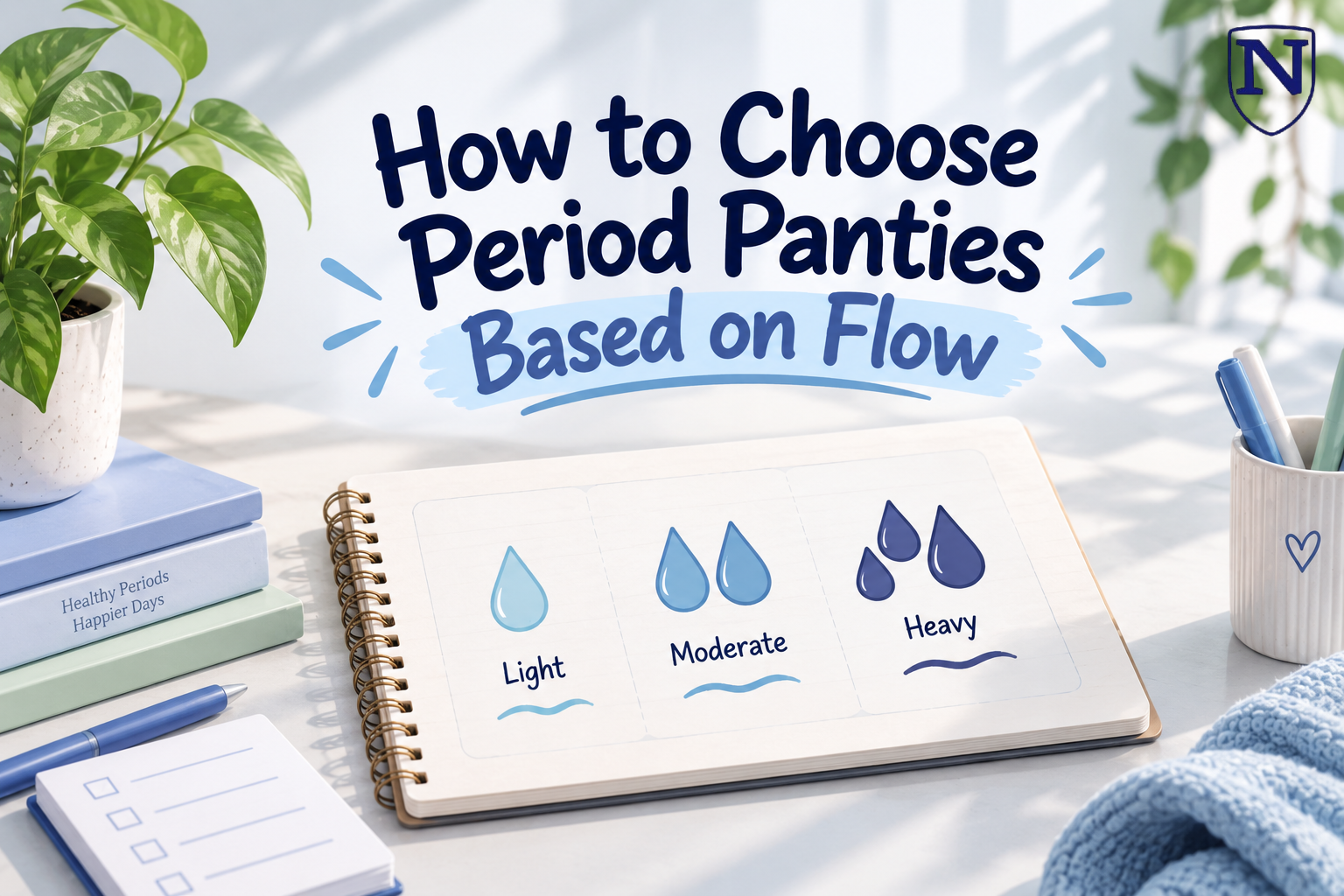
Choosing period panties can feel confusing, since menstrual flow varies from person to person - and even from one day of a period to the next. The right period panty should be selected based on your typical flow, the product's stated absorbency, coverage, fit, and when you plan to wear it.
Quick answer: To choose period panties, first identify whether your flow is light, moderate, or heavy. Then check the product's stated absorbency, coverage, size, and intended wear time. For heavier flow, prioritize higher absorbency and adequate coverage, and follow the manufacturer's usage instructions.
This guide walks through choosing period panties for light, moderate, and heavy flow, along with daytime, overnight, travel, and exercise use.
How to Identify Your Flow
| Flow | General Description |
|---|---|
| Light | Light bleeding or spotting |
| Moderate | Your usual menstrual flow |
| Heavy | Noticeably heavier bleeding that may require more frequent changes or additional protection |
Your flow can also vary throughout the same period, so you may need different absorbency levels on different days.
How to Choose Period Panties Based on Your Flow
The starting point for choosing period panties is understanding your usual flow, then matching it to a product's stated absorbency.
For Light Flow
Lighter absorbency options tend to suit the beginning or end of a period, lighter days overall, or light spotting, provided the specific product is designed for that use. For light flow, comfort and fit matter as much as absorbency, since you're less likely to need maximum protection.
For Moderate Flow
Moderate-flow days generally call for a product with a stated absorbency suited to that level, along with good coverage, a secure fit, and a wear duration that matches how long you'll be between changes.
For Heavy Flow
Heavy-flow days need particular attention to higher stated absorbency, front-to-back coverage, a secure fit, and realistic expectations about wear duration. Not every period panty is designed for heavy flow, so check the product's own guidance rather than assuming. Some people also choose backup protection on especially heavy days.
| Flow Level | What to Look For | What to Consider |
|---|---|---|
| Light Flow | Light or appropriate absorbency | Comfort, fit, everyday use |
| Moderate Flow | Medium or higher stated absorbency | Coverage, fit, wear duration |
| Heavy Flow | Higher stated absorbency | Coverage, secure fit, changing frequency |
| Overnight | Appropriate absorbency and coverage | Front/back coverage and secure fit |
How Does a Period Panty Work?
Most period panties are built with a few working layers: a moisture-wicking contact layer close to the skin, an absorbent core that holds menstrual fluid, a leak-resistant barrier, and an outer fabric that gives the garment its everyday-wear feel. Together, these layers collect and hold fluid while reducing how much reaches your clothing.
Construction alone doesn't tell you whether a specific product is right for your flow. Always check the product's stated absorbency, fit, coverage, and usage instructions rather than assuming the layers guarantee protection on their own. For a closer look at how these layers work, see Nuvy Healthcare's guide on how period panties work.
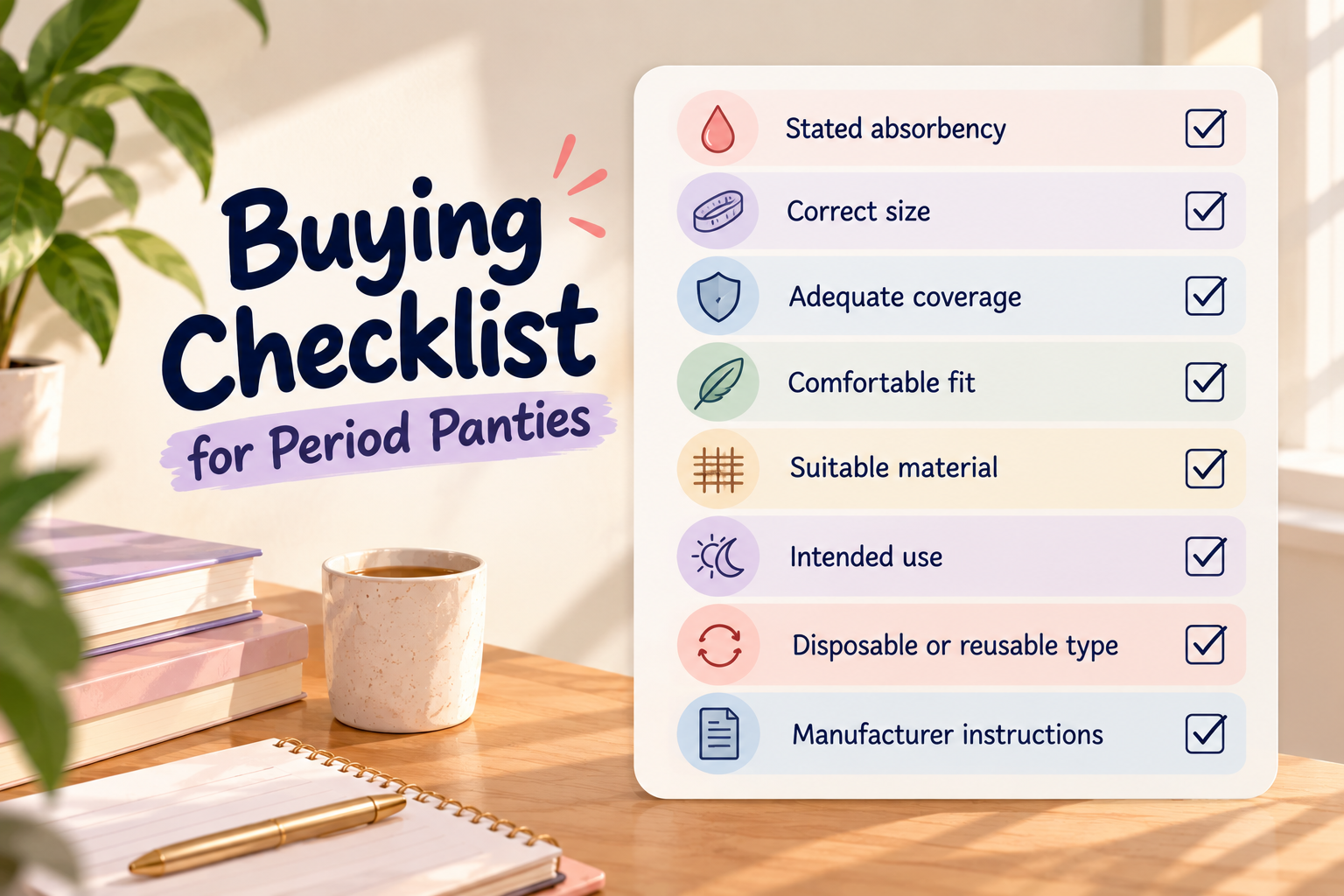
What to Look for in Period Panties Besides Absorbency
Absorbency matters, but it isn't the only factor worth checking.
Check the Coverage
Look at front coverage, back coverage, and - for overnight use - coverage across the areas where menstrual fluid is more likely to escape, particularly depending on your sleeping position.
Choose the Right Size and Fit
Follow the manufacturer's specific size chart rather than assuming your regular underwear size will match exactly. The panty should feel secure without being excessively tight - a poor fit can affect both comfort and how well the absorbent area stays positioned.
Check Materials and Comfort
Look at the fabric or material information, breathability, moisture management, skin comfort, and any care instructions the manufacturer provides. No single fabric can be called universally safest - what works well for one person's skin may not suit another.
Consider Disposable vs Reusable
Product type affects how you use, care for, wash, and dispose of period panties, so it's worth checking this before you buy, especially if your routine depends on easy laundry access or the convenience of throwing a used pair away.
Choose Period Panties Based on How You Plan to Use Them
The right choice can also depend on the situation you're dressing for.
- Daytime: Prioritize comfort, normal freedom of movement, and absorbency appropriate to your flow that day.
- Overnight: Look for higher protection where needed, front-to-back coverage, and a secure fit that stays in place while you sleep.
- Travel or long days: Consider how long you expect to wear the product, whether you'll have access to a change, and carrying a spare pair if needed.
- Exercise: A secure fit and comfort during movement matter, along with coverage and absorbency matched to your flow that day.
| Situation | What to Prioritize |
|---|---|
| Daytime | Comfort + appropriate absorbency |
| Overnight | Coverage + absorbency + secure fit |
| Travel | Absorbency + planned change + spare |
| Exercise | Secure fit + comfort + coverage |
How Long Can You Wear Period Panties?
There is no universal number of hours that applies to every period panty. Wear time depends on your flow, the product's absorbency and design, how saturated it becomes, your comfort, and the manufacturer's own instructions. If you see a generic "X hours" claim, treat it as a general guide rather than a fixed rule for every product or every person. For more on this, see Nuvy Healthcare's guide on how many hours does a period panty absorb.
Are Period Panties Safe to Use?
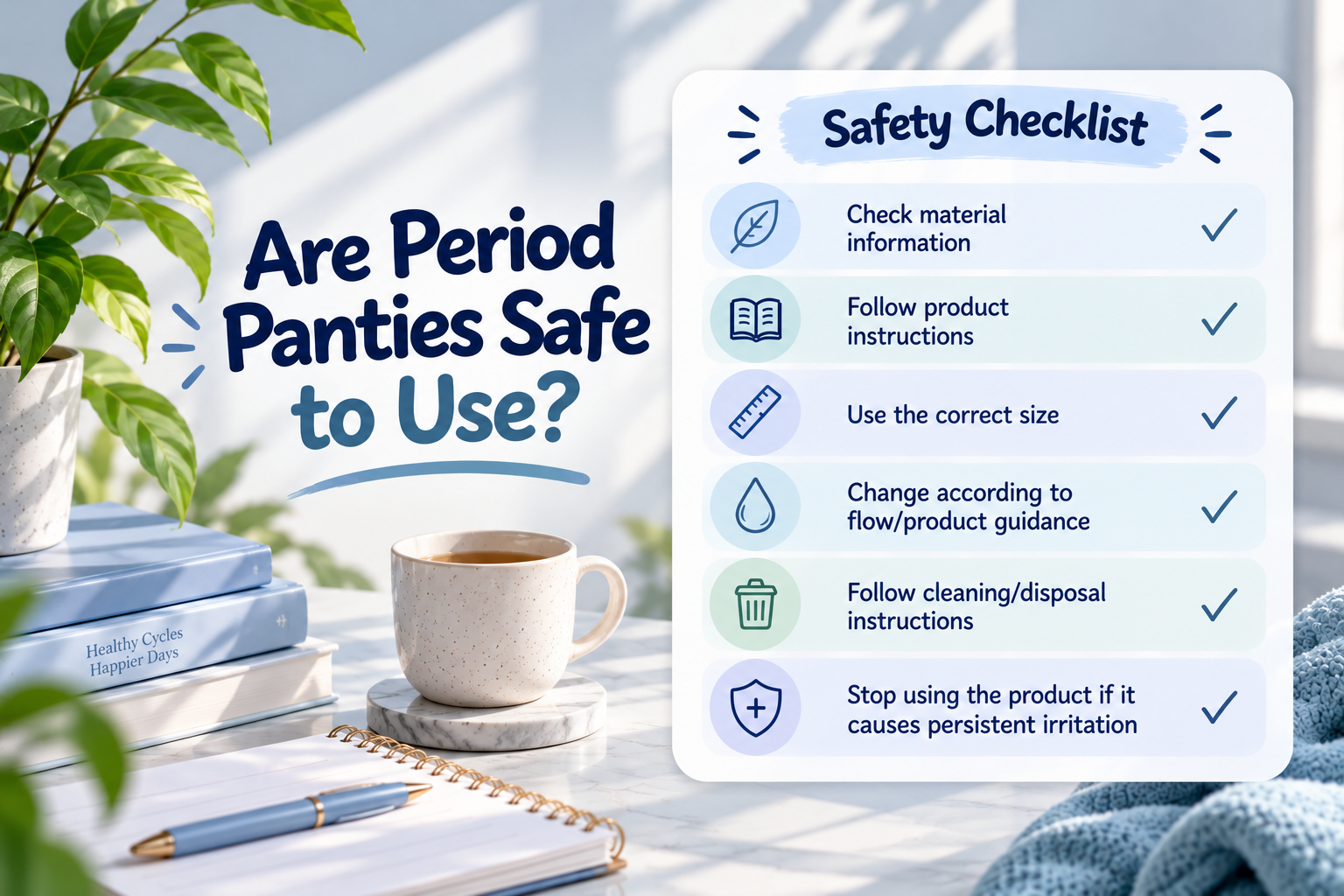
Period panties can be used as a menstrual product when they are used and cared for according to the manufacturer's instructions. As with any period product, individual comfort and skin sensitivity can vary. Check the material information, follow the product's usage and hygiene instructions, choose the correct size, and change the product when it reaches its absorbency capacity, becomes uncomfortable or damp, or according to the manufacturer's instructions. If you notice persistent irritation or discomfort, stop using the product and seek appropriate professional medical advice.
Simple Step-by-Step Guide to Choosing Period Panties
- Identify your flow. Think about your typical light, moderate, and heaviest days.
- Check stated absorbency. Compare your needs against the manufacturer's own guidance.
- Check coverage. Look at front, back, and overnight coverage.
- Select your size. Use the product's specific size chart.
- Consider when you'll wear it. Daytime, overnight, travel, and exercise may call for different priorities.
- Check product instructions. Follow the manufacturer's guidance for usage, changing, cleaning, or disposal.
Choose Based on Your Flow, Fit and Needs
Choosing period panties comes down to a simple sequence: your flow, the product's absorbency, its coverage, the size and fit, how you plan to use it, and the manufacturer's own instructions. Getting these right matters more than any single feature on its own.
If you're ready to look at options, explore Nuvy's period panties for women and check the available sizing and protection details to find what fits your needs. You can also browse Nuvy Healthcare's wider feminine hygiene range for related products.